
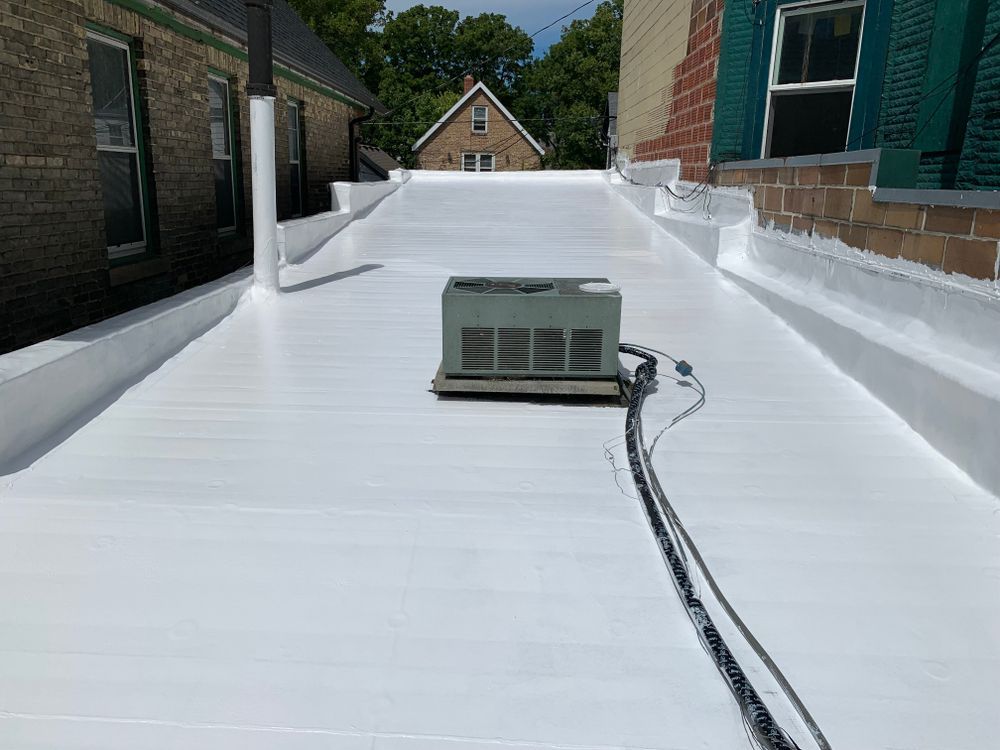
Stop Ponding Water From Causing Leaks
Silicone Roof Coating Systems Installed in Baltimore
Unlimited Earth Creations installs silicone roof coating systems designed for flat commercial roofs that experience frequent ponding water in Baltimore. You may have noticed water sitting on your roof for days after rain, particularly in low spots or around drains. Silicone coatings resist moisture intrusion and UV exposure better than most alternatives, making them well-suited for roofs where drainage is imperfect or where slope cannot be easily adjusted.
This system is applied as a seamless membrane over a prepared substrate. It bonds to single-ply membranes, modified bitumen, and spray foam surfaces once those materials are cleaned and primed. Silicone remains flexible across temperature extremes, does not chalk heavily under sunlight, and sheds water quickly due to its low surface tension. The coating reduces the likelihood of leaks developing at seams, fasteners, or penetrations where water typically finds entry points.
If ponding water has led to recurring leaks or premature wear on your existing roof, you can request an inspection to see if silicone coating is appropriate for your building.
How Silicone Coating Changes Roof Performance
You will see the installation begin with surface cleaning using power washers or mechanical brushes. Any seams showing separation are reinforced with polyester fabric embedded in wet coating. Fasteners and protrusions are sealed with mastic before the main coating is applied. The silicone is rolled or sprayed in two passes, with the first layer serving as a primer and sealer, and the second providing thickness and UV protection.
Once cured, your roof will shed water more effectively, even in areas where slight depressions remain. The surface will no longer show cracking or peeling from prolonged water exposure. Interior spaces beneath the roof will stay dry during storms, and you reduce the need for emergency patch calls. Unlimited Earth Creations ensures that all penetrations, edges, and transitions are properly detailed so the membrane performs as a continuous barrier.
The system does not correct structural drainage problems or replace damaged insulation. If your roof has significant low areas caused by deflection or settling, those issues should be addressed before coating. Silicone works best when applied to a stable substrate with manageable ponding, not standing lakes of water.
What to Know Before Installing Silicone Coating
Property managers often ask about application requirements and long-term maintenance before moving forward with silicone systems.
What substrates accept silicone coating?
EPDM, TPO, PVC, modified bitumen, and spray foam all accept silicone after proper cleaning and priming.
How does silicone perform in Baltimore winters?
Silicone remains flexible at low temperatures and does not crack under freeze-thaw cycling, which is common during Maryland winters.
Why choose silicone over acrylic?
Silicone tolerates ponding water without breaking down, while acrylic coatings can soften or degrade when submerged for extended periods.
When is recoating necessary?
Most silicone systems last ten to fifteen years before requiring a maintenance coat, depending on exposure and traffic.
What maintenance does silicone require?
Annual inspections and occasional cleaning of drains and gutters help maintain performance and identify minor issues early.
Your roof may have areas where water lingers longer than ideal, but that does not always mean replacement is the only option. Contact Unlimited Earth Creations to evaluate whether silicone coating will address your water management and leak prevention needs.