
Handle Temperature Swings Without Cracking
Elastomeric Roof Coating Solutions in Baltimore
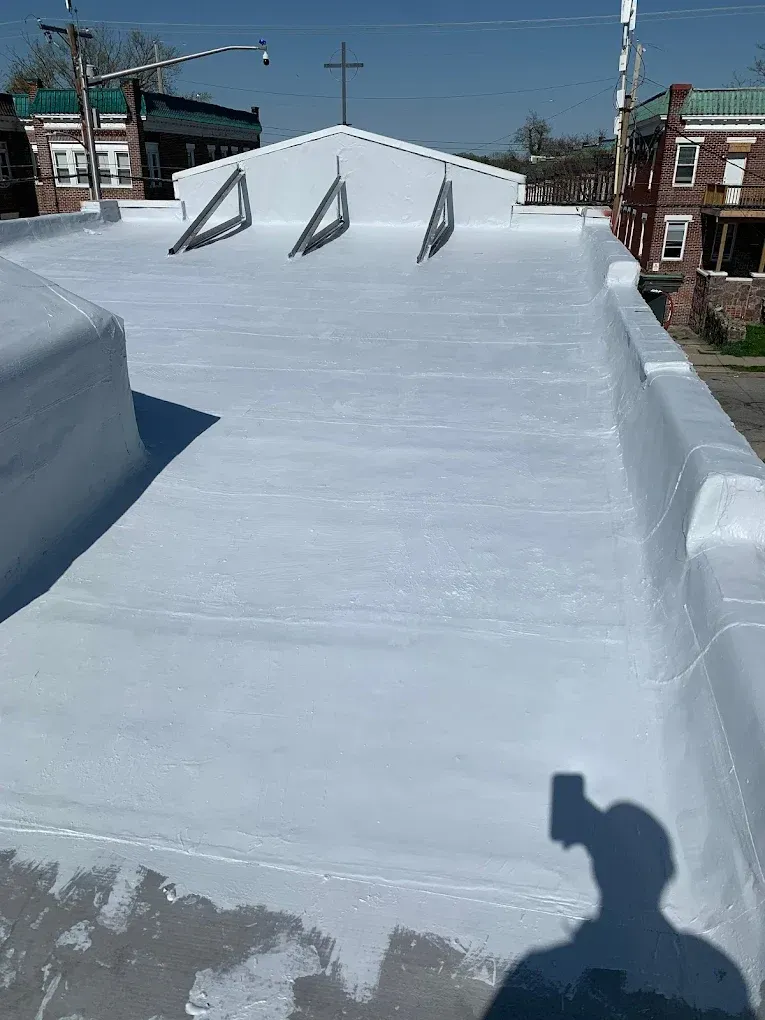
Unlimited Earth Creations installs elastomeric roof coating systems that expand and contract with temperature changes across Baltimore and surrounding areas. You experience Maryland's fluctuating climate firsthand, with summer heat and winter cold creating stress on roof membranes. Elastomeric coatings are formulated to move with the substrate, preventing cracks and separations that occur when rigid materials cannot accommodate thermal cycling. This system is suitable for flat roofs, low-slope installations, and metal surfaces where flexibility is critical.
The coating forms a continuous barrier that prevents water intrusion at seams, fasteners, and transitions. It bonds to a variety of substrates including single-ply membranes, modified bitumen, built-up roofing, and metal panels. Once applied, the material cures into a rubbery membrane that stretches during expansion and returns to its original shape as temperatures drop. This characteristic makes it effective for both residential and light commercial applications where roof movement is expected.
If your roof shows signs of cracking or seam failure due to temperature-related movement, you can arrange an evaluation to determine if elastomeric coating will provide the protection you need.
What You Gain From Elastomeric Coating
You will observe that the roof surface becomes uniform and seamless after coating is applied. Water no longer penetrates at seams or fastener locations, and interior ceilings remain dry even during sustained rain. The membrane accommodates daily and seasonal temperature shifts without losing adhesion or developing cracks. Metal roofs stop showing rust stains at fasteners, and flat roofs no longer exhibit the alligatoring or checking that signals membrane failure.
Unlimited Earth Creations begins by cleaning the substrate and repairing any damaged areas. Seams are reinforced with polyester fabric embedded in the coating, and all penetrations are sealed with compatible mastic. The elastomeric material is applied in two or more coats, with each layer allowed to cure before the next is added. Final thickness typically reaches twenty to thirty mils, depending on substrate and exposure conditions.
This system does not correct structural issues such as sagging decking or failed insulation. If your roof has significant deflection or moisture damage, those problems must be addressed before coating. Elastomeric coatings are designed to protect sound substrates, not to serve as a structural repair material.
Common Questions About Elastomeric Coatings
Property owners and facility managers often need clarity on material selection and application timing before committing to elastomeric systems.
What makes elastomeric coating different from acrylic?
Elastomeric coatings contain more solids and elasticity, allowing greater movement and making them better suited for substrates that experience significant thermal cycling.
How does Baltimore's climate affect application?
High humidity and temperature swings require careful timing of application to ensure proper curing and adhesion, typically during drier months.
Why is fabric reinforcement used?
Fabric embedded at seams and transitions adds tensile strength and prevents the coating from tearing as the substrate moves.
When should you consider elastomeric over other coatings?
If your roof experiences cracking or seam failure due to temperature changes, elastomeric coating offers better flexibility than rigid alternatives.
What maintenance does elastomeric coating require?
Annual inspections and occasional cleaning help identify minor damage before it spreads, extending the system's effective life.
Your roof may be showing stress from temperature-related movement, but that does not always mean replacement is necessary. Reach out to Unlimited Earth Creations to review your roof condition and explore whether elastomeric coating can provide long-term protection.